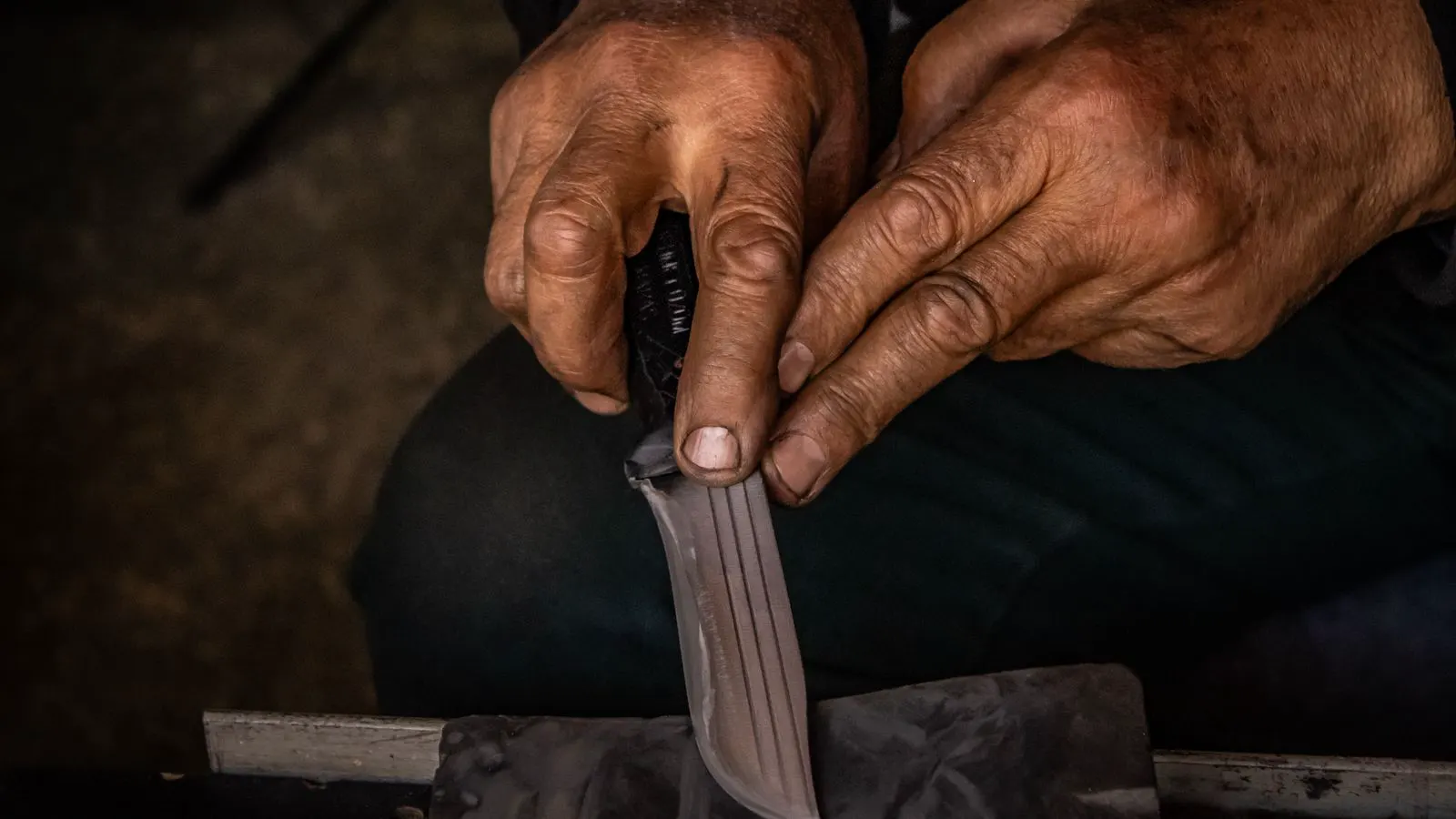
Surgical Stainless Cutlery Checklist for Food Service

This checklist helps food service buyers verify that surgical stainless cutlery meets operational, safety, and hygiene standards. It covers material grades, edge geometry, handle construction, and documentation needed to confirm the cutlery is fit for purpose.
- Verify the stainless steel grade is appropriate for food service, as some surgical grades are not approved for culinary use.
- Check edge geometry and sharpening method to ensure the blades hold an edge during high-volume service.
- Inspect handle construction for secure attachment, smooth surfaces, and resistance to moisture and chemicals.
- Request mill certificates and heat treatment documentation to confirm material integrity and traceability.
- Watch for red flags such as pitting, discoloration, loose handles, or missing documentation.
What is the right material grade for food service?
The first step in verifying surgical stainless cutlery is confirming the alloy composition. Surgical stainless steel is often a high-grade austenitic steel, but not all grades are approved for culinary use. Some grades contain higher levels of nickel or other elements that may not meet food contact regulations in your region.
Before accepting a shipment, request the mill certificate for each batch. The certificate should list the chemical composition and heat number. Cross-reference the grade against local food safety regulations. If a grade is not explicitly approved for food contact, it is a red flag, even if the knife looks identical to an approved model.
In high-volume kitchens, the material must withstand repeated exposure to acidic foods, strong detergents, and heat. A grade that resists rust in a hospital setting may not behave the same way in a kitchen where it encounters vinegar, citrus, and salt. Ask the supplier for data on pitting resistance in chloride-rich environments. If they cannot provide specific test results, proceed with caution.
Does the edge geometry match the intended task?
Surgical stainless cutlery is often designed for precision work, which can differ from the demands of food service. A chef knife in a hospital laboratory may have a very fine, thin edge for delicate dissection. In a kitchen, that same edge can chip or roll if used on bones, frozen foods, or hard produce.
Check the blade thickness near the tip. For heavy-duty food service tasks, a slightly thicker edge near the tip helps resist deformation. Look for a consistent grind along the full length of the blade. A grind that becomes too thin near the handle is a common failure point during repeated use.
Sharpening method matters. Some surgical cutlery is finished with a stone or diamond, which creates a very fine edge that holds well under light pressure. Others are honed to a coarser profile for durability. Ask the supplier about the recommended sharpening system. If the edge requires frequent micro-honing to stay sharp, it may not be practical for a busy service line.
A table can help you compare common edge profiles and their suitability for food service:
| Edge Profile | Typical Use | Durability | Maintenance |
|---|---|---|---|
| Fine Micro-Bevel | Precision cuts, soft foods | Low | High, requires frequent honing |
| Standard Rocker | General chopping, slicing | Medium | Moderate, standard honing |
| Thick Tip Rocker | Heavy chopping, root vegetables | High | Low, resists chipping |
| Scalloped or Wave | Specialized texture work | Medium | High, difficult to sharpen |
Match the edge profile to the primary tasks in your kitchen. If your team performs a lot of bone-in work, a fine micro-bevel will likely fail. A thick tip rocker is a safer choice for mixed-use environments.
How do you verify handle construction and attachment?
The handle is where most failures occur in high-volume food service. A blade can be perfect, but if the handle comes loose, the knife becomes a safety hazard. Check the attachment method first. Riveted handles are common in heavy-duty cutlery and offer good resistance to loosening. Bolts are used in some surgical tools but are less common in kitchen knives and can be a point of stress.
Inspect the handle material. Plastic handles are lightweight but can become brittle over time, especially when exposed to heat and detergents. Wooden handles require regular maintenance to prevent moisture absorption and splitting. Composite materials, such as G10 or similar high-density plastics, offer a balance of durability and ease of cleaning.
Look for smooth, continuous transitions from the handle to the bolster. Sharp corners or gaps are places where moisture and bacteria can collect. In food service, these areas must be cleanable with a brush and sanitizer. If the handle has grooves or texturing that is difficult to scrub, it may fail hygiene audits.
Check the end cap. A solid, unbreakable end cap prevents the handle from splintering if the knife is dropped on a hard floor. A loose or missing end cap is an immediate red flag. It indicates poor quality control and suggests the knife may have been dropped or mishandled during production.
What documentation should you request before purchase?
Documentation is your primary defense against receiving non-conforming cutlery. A supplier who cannot provide a mill certificate or a heat treatment report is not transparent about their material sourcing. In food service, traceability is a core requirement.
Request the following documents for each batch:
- Mill certificate listing chemical composition and heat number.
- Heat treatment report showing the specific cycle used for the blade.
- Sharpness test results, if available, showing the angle and quality of the edge.
- Food contact compliance declaration for your specific region.
- Warranty terms, including what is covered and for how long.
Some suppliers provide these documents on request. Others include them in the packing slip. If you must chase documents after delivery, the process is already a sign of weak quality control. Build these requirements into your purchase order from the start. A clear specification sheet that lists required documents will save you time and reduce the risk of receiving substandard product.
Also check for lot numbers. Each batch should have a unique identifier that links the physical product to the documentation. If you cannot trace a specific knife back to a mill certificate, you have no proof of material integrity. This is a common gap in smaller suppliers. If you are buying in volume, insist on lot-level traceability.
How do you test edge retention in a controlled way?
Visual inspection is not enough. You need a functional test to verify that the edge holds up under realistic conditions. Do not test on a cutting board. Use a standard test material that simulates the workload.
A simple method is to slice a piece of dense, dry bread or a raw potato. Count the number of cuts before the edge shows visible wear, such as a rolled edge or a change in the cut surface. Compare this result against a knife you already know performs well in your kitchen.
For a more rigorous test, use a standardized edge retention tester if your facility has one. These devices measure the force required to cut through a specific material. They provide quantitative data that is useful for comparing different brands or batches. If you do not have this equipment, a simple manual test with a consistent material and a set number of cuts will still reveal significant differences.
Pay attention to the sound the knife makes. A high-quality edge produces a consistent, quiet cut. A dull or poorly honed edge produces a scraping sound. If the knife sounds like it is dragging, it will wear your cutting boards and reduce efficiency. This is a practical check that requires no special equipment.
What are the common red flags?
Red flags are often small details that point to larger quality issues. Here are the ones to watch for:
- Pitting or discoloration: Even small pits on the blade indicate the steel is not resistant to corrosion. In a kitchen, this can lead to bacterial growth and a rapid loss of hygiene.
- Loose handle or wobble: If the handle moves when you tap it, the attachment is failing. This is a safety issue and a sign of poor assembly.
- Uneven edge: Look at the blade from the side. The edge should be straight and consistent. A wavy or uneven edge suggests poor grinding or heat treatment.
- Missing documentation: If the supplier cannot provide a mill certificate or compliance declaration, do not accept the shipment. You cannot verify the material.
- Scratches on the cutting edge: Scratches on the edge are not just cosmetic. They create stress points that will lead to chipping or cracking under load.
If you see any of these issues, quarantine the product. Do not use it in service. Contact the supplier with photos and the lot number. A reliable supplier will replace the batch or provide a credit. An unreliable supplier will dispute the claim or offer no remedy. Your response to this situation will tell you more about the supplier than any catalog page.
How do you maintain the cutlery to extend its life?
Maintenance is part of the verification process. A knife that is not maintained will fail, even if it started out well. Establish a simple routine that matches the workload.
After each use, wash the knife by hand. Dishwashers use high heat and harsh chemicals that can damage the edge and the handle. Dry the knife immediately to prevent water spots and pitting. Store it on a magnetic strip or in a block with separate slots. Laying knives flat on a counter or in a drawer with other tools will dull the edge.
Sharpen only when the edge loses its ability to cut cleanly. Do not sharpen on a schedule. Use a honing steel to realign the edge between sharpenings. If the honing steel no longer corrects the cut, the edge is damaged and needs professional sharpening or replacement.
Keep a log of maintenance. Note the date, the knife, and the action taken. This log helps you track which models hold up best and which require more attention. It also provides data for future procurement decisions. If a model consistently requires more sharpening or develops pitting, it is not the right fit for your kitchen, regardless of its price or appearance.
Frequently asked questions
Can any surgical stainless steel be used for food service?
No. Some surgical grades are not approved for food contact. You must verify the specific alloy composition against local food safety regulations.
How do I know if the edge is sharp enough for heavy chopping?
Check the blade thickness near the tip and the grind type. A thicker tip and a rocker grind are better suited for heavy chopping than a fine micro-bevel.
What is the best way to store surgical stainless cutlery?
Store it on a magnetic strip or in a block with separate slots. Avoid laying it flat or storing it with other tools that can damage the edge.
Do I need a mill certificate for every batch?
Yes. A mill certificate is the primary document that verifies the chemical composition and heat treatment of the steel. It is required for traceability and compliance.
What should I do if the handle feels loose?
Quarantine the knife immediately. A loose handle is a safety hazard and a sign of poor quality control. Contact the supplier and request a replacement.