Buyers Guide: Selecting Certified Induction Cookware for Cafeterias
Cafeteria buyers should prioritize induction compatibility, material safety certifications, and heat retention performance. This guide outlines the specific criteria to evaluate cookware against industry standards, ensuring durable, safe, and efficient equipment for high-volume food service environments.
- Verify magnetic base compatibility before purchase to prevent energy waste and equipment damage.
- Prioritize cookware with documented food contact safety certifications for imported or new items.
- Evaluate heat retention and base thickness to maintain temperature stability during long service periods.
- Select materials that resist corrosion and can withstand daily sanitization cycles.
- Use a structured checklist to compare vendors and ensure all procurement requirements are met.
Defining Certified Induction Cookware for Commercial Use
Certified induction cookware for cafeterias refers to cookware specifically designed and tested to operate on induction hobs. It must meet minimum requirements for magnetic conductivity, base flatness, and material safety. In a commercial setting, the term “certified” usually implies third-party verification of these properties.
Many cafeteria managers confuse induction cookware with standard stovetop pots. The difference is significant. Induction hobs do not heat the metal directly. They create an electromagnetic field that induces eddy currents in the base. If the base is not ferromagnetic, the pot will not heat. This makes compatibility a hard requirement, not a preference.
For high-volume food service, the stakes are higher. A pot that works on a gas burner but not on induction will halt a service line. A pot that heats but fails a food contact test creates a compliance risk. Buyers need a clear framework for checking these two pillars: performance and safety.
Why Induction Compatibility Is a Non-Negotiable Criterion
Induction compatibility relies on three physical properties. The first is magnetic permeability. The base material must attract a strong magnet. The second is base flatness. The bottom of the pot must sit flush against the hob surface. Any gap reduces coupling efficiency and can trigger safety shutdowns. The third is base thickness. A thin base may warp under heat, creating a new gap and ruining the connection.
A practical test is simple. Hold a strong neodymium magnet against the base. If it sticks firmly, the material is likely compatible. However, this only checks magnetism. It does not check flatness or thickness. Commercial buyers should request technical data sheets from vendors. These documents usually list the base material, thickness in millimeters, and the minimum power rating the cookware can handle.
Another common mistake is buying “all-purpose” cookware. These items often feature multi-material bases. They may have a thin stainless steel shell with a copper or aluminum insert. While this can improve heat distribution, it adds complexity. If the magnetism comes from a thin steel layer, it may wear down over time or fail if the base is cleaned too aggressively. For cafeterias, a solid stainless steel base is often the safer choice. It is durable, resistant to abrasion, and consistently magnetic.
Evaluating Material Safety and Food Contact Standards
Material safety is distinct from magnetic compatibility. Induction cookware is often made of stainless steel, but the grade matters. Different stainless steel grades contain varying levels of chromium and nickel. These elements determine how the metal reacts to acids, fats, and cleaning agents.
In food service, cookware is exposed to high heat, acidic sauces, and harsh sanitizers daily. Low-grade metals can leach compounds into food or corrode under these conditions. Certified cookware should list the specific stainless steel grade, such as 18/10 or 18/8. These are standard food-grade alloys. They offer a balance of corrosion resistance and strength.
Buyers must also check for food contact certification. This is especially critical for imported items. Regulations vary by region, but most require a declaration that the material has been tested against specific limits for heavy metals and migration. Look for documentation from recognized testing laboratories. A certificate number is more valuable than a verbal promise. If a vendor cannot provide a test report, treat the product as unverified.
Aluminum is another common material in cookware. It conducts heat well but is not magnetic. To make it work on induction, manufacturers add a magnetic layer. This layer is sometimes aluminum itself, which is a mistake, or a steel plate. If the steel plate is thin, it may not provide consistent magnetic response. aluminum can react with acidic foods. For cafeterias that serve tomato-based sauces or citrus dishes, stainless steel is generally the more predictable choice.
Heat Retention and Base Performance Criteria
Induction cookware transfers heat quickly. This is a major advantage for speed and energy efficiency. However, the speed can also be a disadvantage if the cookware lacks heat retention. If the base is too thin, the pot may lose heat rapidly when food is added. This causes temperature fluctuations that require constant adjustment.
Base thickness is the key variable. A base of two to three millimeters is typical for commercial use. Thicker bases store more thermal energy. They smooth out temperature swings. This is useful for simmering stocks or holding sauces at a consistent temperature. Thinner bases heat faster but are more prone to warping. Warping creates the gap that kills induction efficiency.
Weight is another indicator. A heavy pot usually signals a thicker base and higher quality construction. It also feels more stable on the hob. This reduces the risk of tipping during pouring. For large pots used for soups or stews, weight is a safety feature. It anchors the vessel against the heat source.
Consider the shape of the base as well. A slightly concave base can sometimes improve contact with a curved hob surface. However, most commercial induction hobs are flat. A perfectly flat base is the standard. If the base is concave, it may rock. This rocking can cause the pot to move and the magnet to lose contact. Check the flatness with a straightedge if you are inspecting the product in person.
Procurement and Vendor Verification Steps
Cafe procurement for induction cookware should follow a structured verification process. Do not rely on product descriptions alone. Request a technical data sheet. This document should list the base material, thickness, magnetic rating, and food contact certification details. If the data sheet is missing, the vendor is not fully transparent.
Contact the manufacturer directly. Ask for the test reports. A reputable supplier will provide a copy of the food contact certification and the induction compatibility test. Look for a serial number or batch code on the cookware. This ties the physical item to the documentation. Without it, you have a claim but no proof.
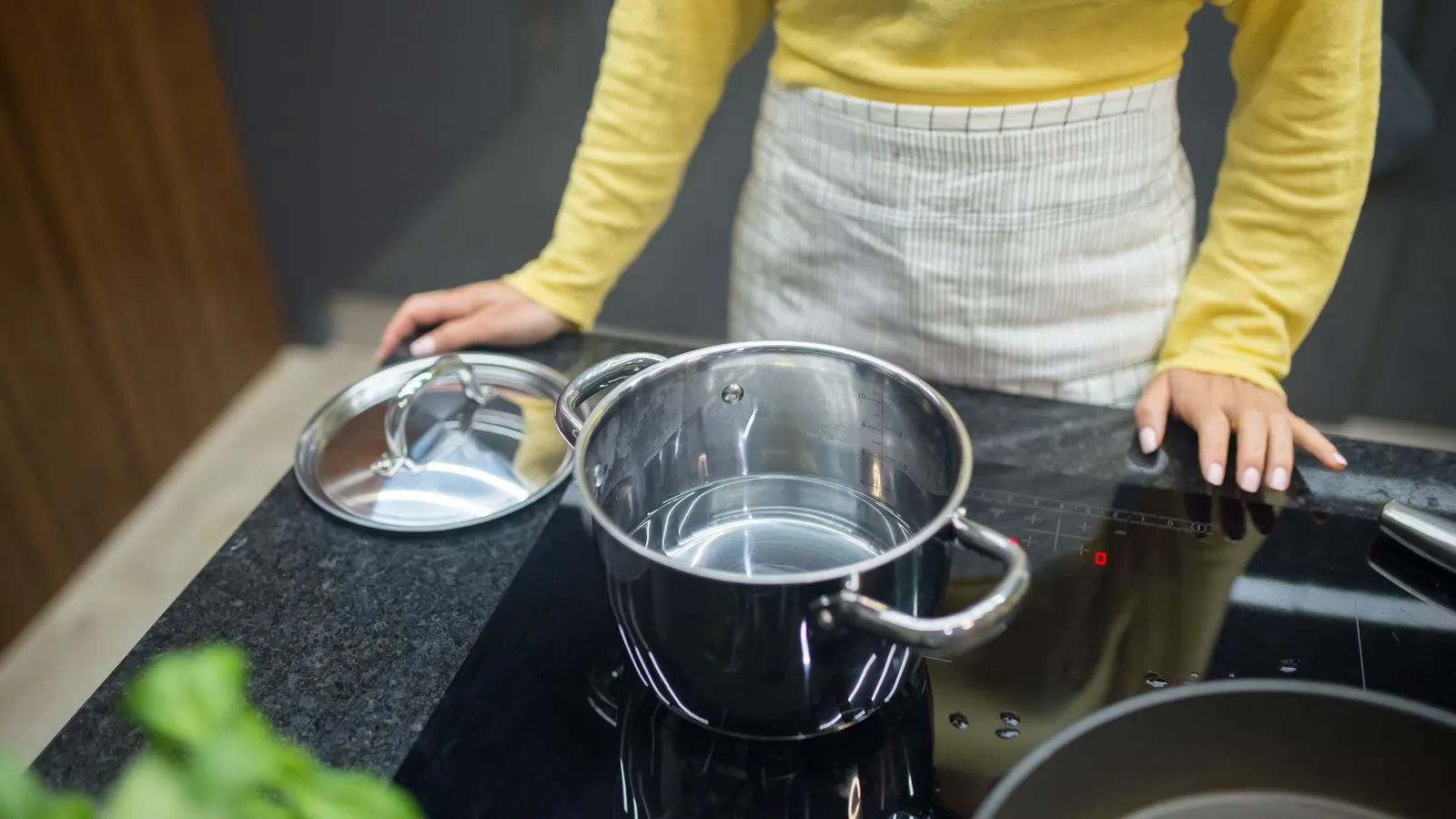
When ordering samples, test them on your existing induction hobs. Do not use the same pot for the entire service. Run a test with water. Observe how quickly it heats. Check if the base stays flat. Look for any warping after a long boil. This hands-on test reveals issues that paper documents miss.
Compare at least two or three vendors. Do not buy from a single source without a backup. Prices for certified induction cookware vary based on material quality and base thickness. A slightly higher price often reflects a thicker base and better food safety documentation. In a cafeteria, the cost of downtime from a failed pot can far exceed the cost of a more durable item.
Criteria Table for Selecting Certified Induction Cookware
Use this table to score potential products during your evaluation. It provides a clear framework for comparing options.
| Criterion | What to look for | Why it matters |
|---|---|---|
| Base Material | Solid stainless steel, food grade | Ensures consistent magnetism and resistance to corrosion and acid. |
| Base Thickness | At least 2.0 millimeters | Prevents warping and improves heat retention for stable cooking. |
| Flatness | Perfectly flat bottom | Maximizes electromagnetic coupling with the induction hob. |
| Food Contact Cert | Third party lab report | Verifies safety standards and legal compliance for imported goods. |
| Weight | Heavy and stable | Indicates quality construction and reduces tipping risk on hobs. |
| Warranty | Manufacturer coverage | Signals confidence in product durability and long term performance. |
Decision Checklist for Final Selection
Before finalizing your order, run through this checklist. It ensures you have met all technical and safety requirements.
- Confirm the base material is ferromagnetic and food grade.
- Verify the base thickness is at least 2.0 millimeters.
- Check the flatness of the base with a straightedge.
- Request a copy of the food contact certification.
- Review the induction compatibility test report.
- Test a sample on your existing induction hobs.
- Confirm the warranty terms for commercial use.
- Ensure the vendor can provide batch traceability.
If any of these steps are missing, do not proceed. In a cafeteria environment, the cost of a compliance failure or equipment failure is too high to take a chance on unverified products. Stick to certified induction cookware that meets all these criteria. It will serve your kitchen better, keep your staff safer, and protect your reputation.
Frequently asked questions
How do I know if a pot is compatible with induction?
Place a strong magnet against the base. If it sticks firmly, the pot is likely compatible. Always check the base thickness and flatness as well.
What is the minimum base thickness recommended for cafeterias?
A base thickness of at least 2.0 millimeters is generally recommended. It provides better heat retention and resists warping under commercial use.
Does aluminum cookware work on induction?
Standard aluminum does not. Some aluminum pots have a magnetic steel layer added to the base. This can work, but stainless steel is often more durable and consistent for commercial kitchens.
Why is food contact certification important?
It verifies that the material meets safety standards for heavy metals and migration. This is especially critical for imported cookware to ensure legal compliance and food safety.
Can I buy induction cookware from any vendor?
You should only buy from vendors who can provide technical data sheets and third party test reports. Avoid vendors who cannot verify the induction compatibility or food safety of their products.